Martial arts flooring
25mm Interlocking Foam Mats: The Best Floor for Karate, MMA and Kickboxing
In a martial arts club the mat is the equipment. Here is why 25mm reversible tiles in red and blue suit karate, MMA and kickboxing — and when a throw needs 40mm.
24 November 2026 · 7 min read · Black Bull Fitness
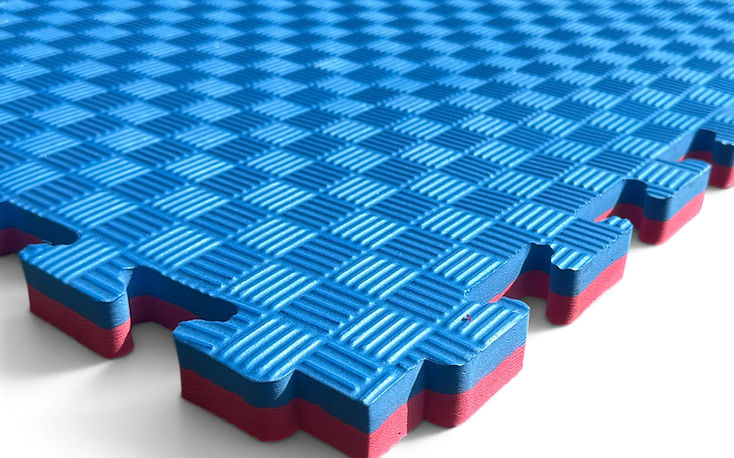
In a martial arts club the mat is the equipment. Members spend the whole session on it — barefoot, pivoting, falling and throwing each other — so the floor decides how hard the session feels the next morning.
A 25mm reversible interlock mat, red on one side and blue on the other, is the thickness most clubs settle on: enough foam to take a fall, firm enough to push off and pivot without sinking.
What 25mm interlocking foam mats actually are
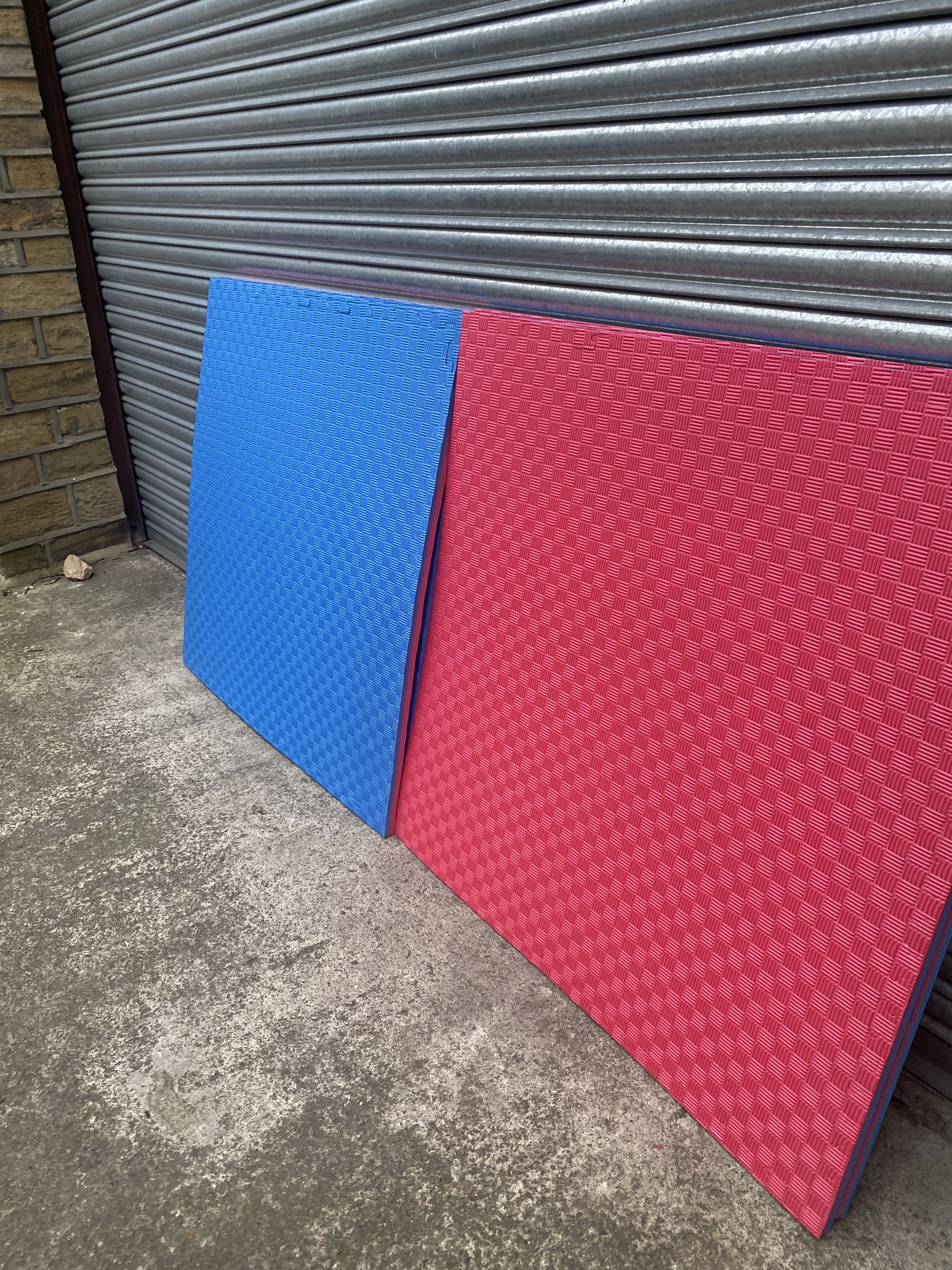
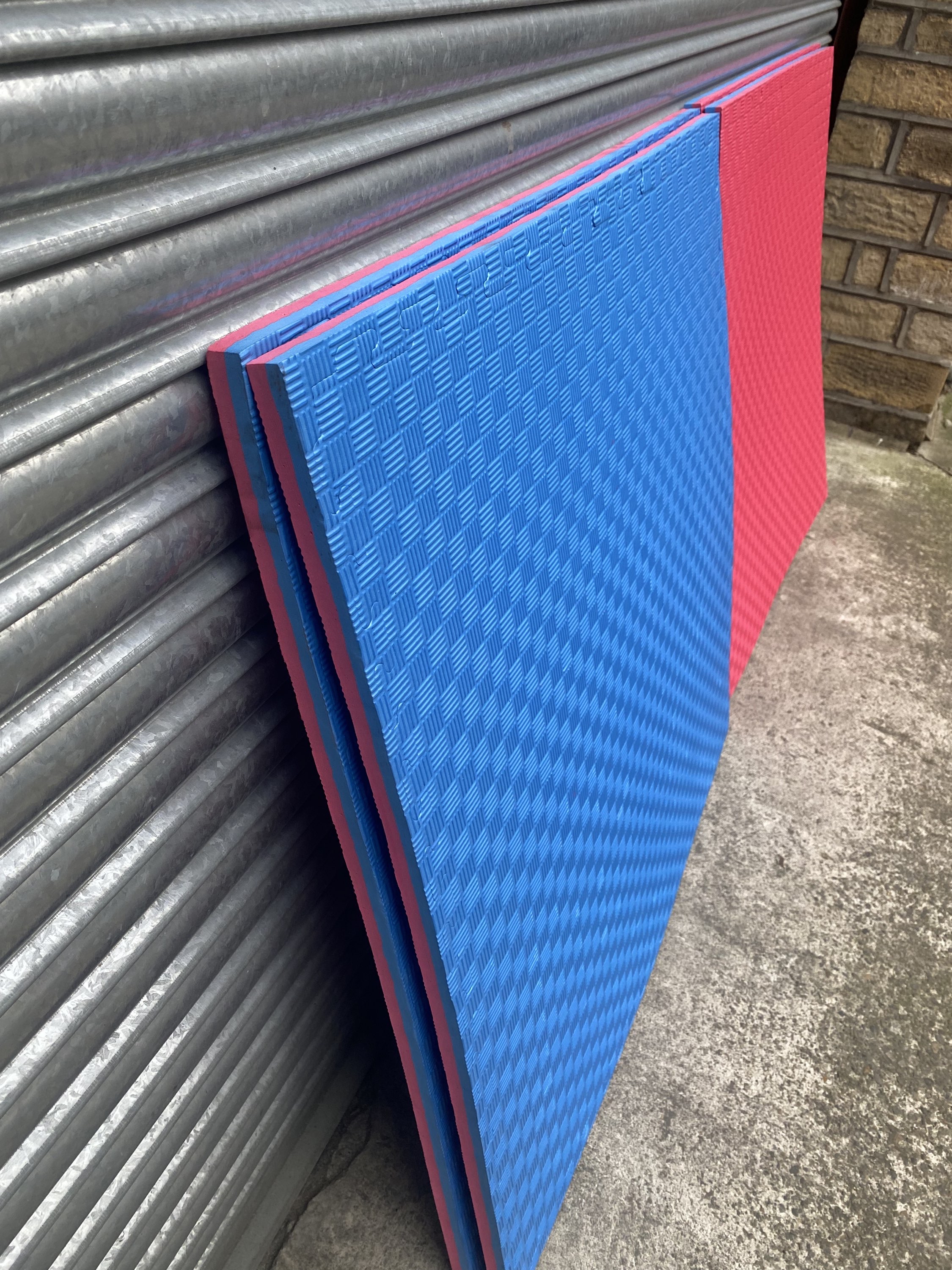
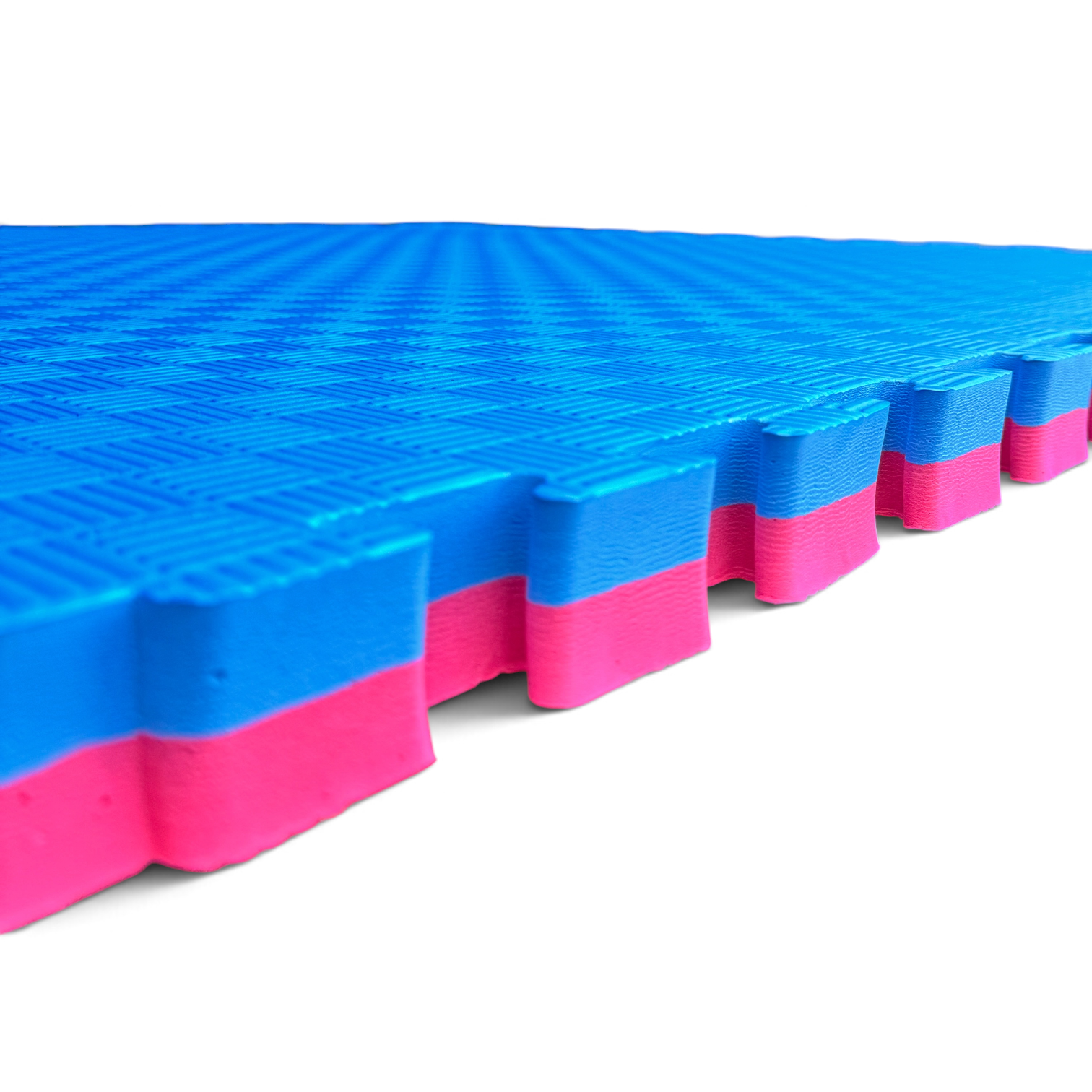
1m x 1m foam tiles with a jigsaw edge that locks together without adhesive. They are reversible — red on one face, blue on the other — so you can mark out a competition square, colour-code training areas or simply flip a worn tile.
They are light enough for one person to lay a whole hall in an afternoon, and they lift again when the space has to go back to being a sports hall, a village hall or a garage.
Benefits for commercial gyms and clubs
A club floor has to survive six classes a day, borrowed halls and members who train in everything from bare feet to boxing boots. These are the things that matter when you are choosing it.
- Impact absorption — a 25mm tile takes the edge off a fall, a sweep or a takedown, so the floor gives a little instead of your student’s shoulder.
- Joint protection — hips, knees, elbows and wrists land on foam, not on a sports hall floor, session after session.
- Barefoot grip — the textured surface holds through pivots, stance changes and groundwork, even once the class is sweating.
- Reversible red and blue — two colours on one tile: mark out a competition square or boundary line, or flip a worn tile instead of replacing the floor.
- Replace one tile, not the floor — damaged squares lift straight out and lock back in, so a busy club never has to close an area for a repair.
- No adhesive, laid in an afternoon — tiles lock together by hand and lift again for cleaning, events or a hall you have to hand back.
- Easy to keep clean — sweep and mop. Sweat, chalk and tape residue wipe off a sealed foam surface.
- Club floor without a fit-out budget — proper martial arts matting at a cost per square metre that suits a club, a leisure centre or a home dojo.
Karate
Karate is barefoot work on a hard floor: pivoting through kumite turns, dropping into stance, and the occasional fall from a sweep. The foam takes the impact out of those landings while staying firm enough that your heel does not sink when you drive off.
Red and blue on one tile is genuinely useful here — lay a boundary for the competition square, then flip to the other colour when you want to reset the hall.
MMA
Grappling, takedowns and ground work put a different kind of load through the floor: shoulders and hips landing, knees sliding, bodies rolling. 25mm is right for technique drilling, controlled sparring, bag work and conditioning.
For full-power throws and repeated takedowns at speed, read the 40mm section below — that is the step where depth really earns its money.
Kickboxing and boxing fitness
Stance work, footwork drills, circuits and bag rounds. The same floor that takes a pivot takes a dropped kettlebell, which means you can run a boxing fitness class and a strength session in the same room without changing the floor between them.
Which thickness for which discipline?
| Training | Mat |
|---|---|
| Karate — kata and kumite | 25mm |
| Kickboxing, boxing fitness and pad work | 25mm |
| MMA technique and controlled sparring | 25mm |
| Judo, MMA and wrestling with full throws | 40mm |
Shopping for a home dojo or a smaller club floor? Our 20mm red and blue interlock mats are the same reversible tile in a firmer, lower-profile build.
When to step up to 40mm
If your sessions include overhead throws — judo, wrestling, suplex and hip throws, or full-contact sparring with takedowns — go thicker. Our jumbo 40mm blue and red interlock mats give that extra depth of foam for a body landing from height, and they lock together on the same 1m grid as the 25mm tiles.
Plenty of clubs run both: 25mm through the main training floor, 40mm in the throwing area or the ring. Because the tiles share a grid, the two thicknesses can sit side by side.
How many tiles do I need?
Each tile covers one square metre. Measure the longest length and width of the hall, multiply them together, then add 5–10% for cuts around pillars, doors and mat edges. A 12m x 8m hall is 96m², so order around 100–105 tiles and keep the spares for a future layout change.
The gym flooring page has a coverage calculator that does the sum for you.
Kit out the hall
Reversible red and blue tiles from £14 each, with free UK mainland pallet delivery on orders over £500. Shop 25mm red and blue mats, step up to 40mm jumbo mats, or browse all flooring. Ordering for a club? Call 07721 325882 with the hall size and we will work out the tile count.
Common questions
Is 25mm thick enough for karate and kickboxing?
Yes. For kata, kumite drills, footwork, pad work and controlled sparring, 25mm is the thickness most clubs use — it takes the sting out of a fall from a sweep while staying firm enough to push off and pivot. If your sessions include full-power throws or repeated takedowns, move up to 40mm.
Can I use 25mm mats for MMA and judo throws?
For controlled drilling and technique work, yes. For repeated overhead throws, suplexes and takedowns at speed, 40mm gives the extra depth of foam that a body landing from height needs — and it locks together on the same 1m grid.
Why are the mats red on one side and blue on the other?
They are reversible, so one tile gives you two colours. You can flip a worn or stained tile instead of replacing the floor, colour-code a competition square or boundary line, or split a hall into training areas.
Do interlocking mats need to be glued down?
No. The jigsaw edges lock the tiles together and the floor sits loose, so you can lift it for cleaning, reconfigure the hall or take it with you if you move premises. On ramps or where the floor is dragged over, a mat tape or adhesive keeps the joints tight.