Flooring guide
20mm Rubber Gym Flooring: Why It Suits Home and Commercial Gyms
Twenty millimetres is the thickness most gyms settle on. Here is what it protects, where it works, and how it holds up to racks, dropped dumbbells and daily footfall.
24 November 2026 · 8 min read · Black Bull Fitness

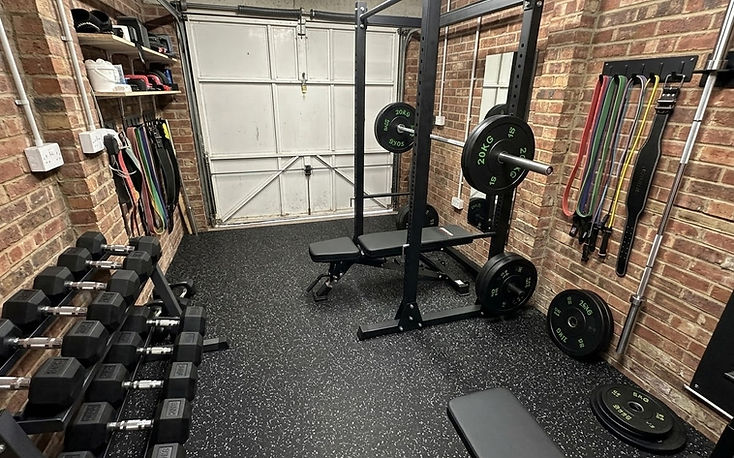
Rubber flooring is the first thing most people buy for a gym and the last thing they think about. Get it wrong and every dropped dumbbell rings through the house, your concrete slab chips and your racks never sit quite level. Get it right and you stop noticing the floor entirely — which is exactly the point.
Twenty millimetres is the thickness we recommend to almost every customer, from a single garage to a full commercial floor. Here is what it does, where it works, and how to work out how much you need.
What 20mm rubber gym flooring actually is
Our 20mm tiles are 1m x 1m squares of dense recycled rubber crumb, finished with a coloured EPDM fleck — black and white, black and yellow or black and grey. They are heavy, matte and lightly textured, and they butt together tightly enough to form a continuous floor without adhesive.
That density is the whole point. A cheap foam mat compresses under a rack foot and stays compressed. A 20mm rubber tile springs back. It is the difference between a floor that lasts a season and one that lasts a decade.
The benefits of 20mm rubber flooring
- Impact protection — a 20mm tile spreads the force of a dropped dumbbell or a missed deadlift across the floor instead of your slab, your bar and your neighbours.
- Protects the subfloor — concrete, screed and garage slabs stay free of chips, gouges and cracks, the damage that is expensive to put right later.
- Quieter training — rubber deadens vibration and the ring of steel on concrete, which matters in a spare room, a conservatory or a shared building.
- Grip you can trust — the flecked, matte surface stays grippy under a loaded barbell, in socks or in bare feet, even when you are sweating on it.
- Holds heavy kit — racks, benches, plate trees and cardio machines sit level and do not sink into the floor, so nothing rocks mid-set.
- Straightforward install — loose-laid 1m x 1m tiles butt together tightly. Cut around walls and pillars with a sharp knife, and you can lift them again if you move.
- Copes with damp and cold — garages and conservatories swing in temperature. Dense rubber shrugs off condensation and humidity that would ruin carpet or chipboard.
- Built to last — commercial-grade tiles take years of daily footfall, chalk, sweat and dropped weight without flattening or fraying.
Why 20mm, and not thinner or thicker?
Thickness is a trade-off between protection and stability. Thinner is cheaper and easier to handle; thicker absorbs more but becomes softer underfoot.
| Thickness | Best for |
|---|---|
| 10–15mm | Cardio machines, stretching and light dumbbell work |
| 20mm | Home and commercial gyms with racks, benches and free weights |
| 25mm | Functional areas, circuits, mat work and martial arts |
| 40mm | Heavy bag work, plyometrics and full-contact training |
20mm sits in the middle: thick enough to take a loaded barbell and a dropped dumbbell, firm enough that a power rack does not rock. For the full breakdown, our rubber gym flooring guide covers every thickness we stock.
20mm rubber flooring in a home gym
Home gyms are usually garages, conservatories or spare rooms — spaces that were never designed for training. They get cold, they get damp, and the floor underneath is often bare concrete or chipboard.
20mm tiles solve all three problems at once. They lift your kit off a cold slab, they shrug off condensation that would swell chipboard or rot carpet, and they turn a hard, echoing room into one you can train in at six in the morning without waking the street. Loose laid, they come up again when you move house.
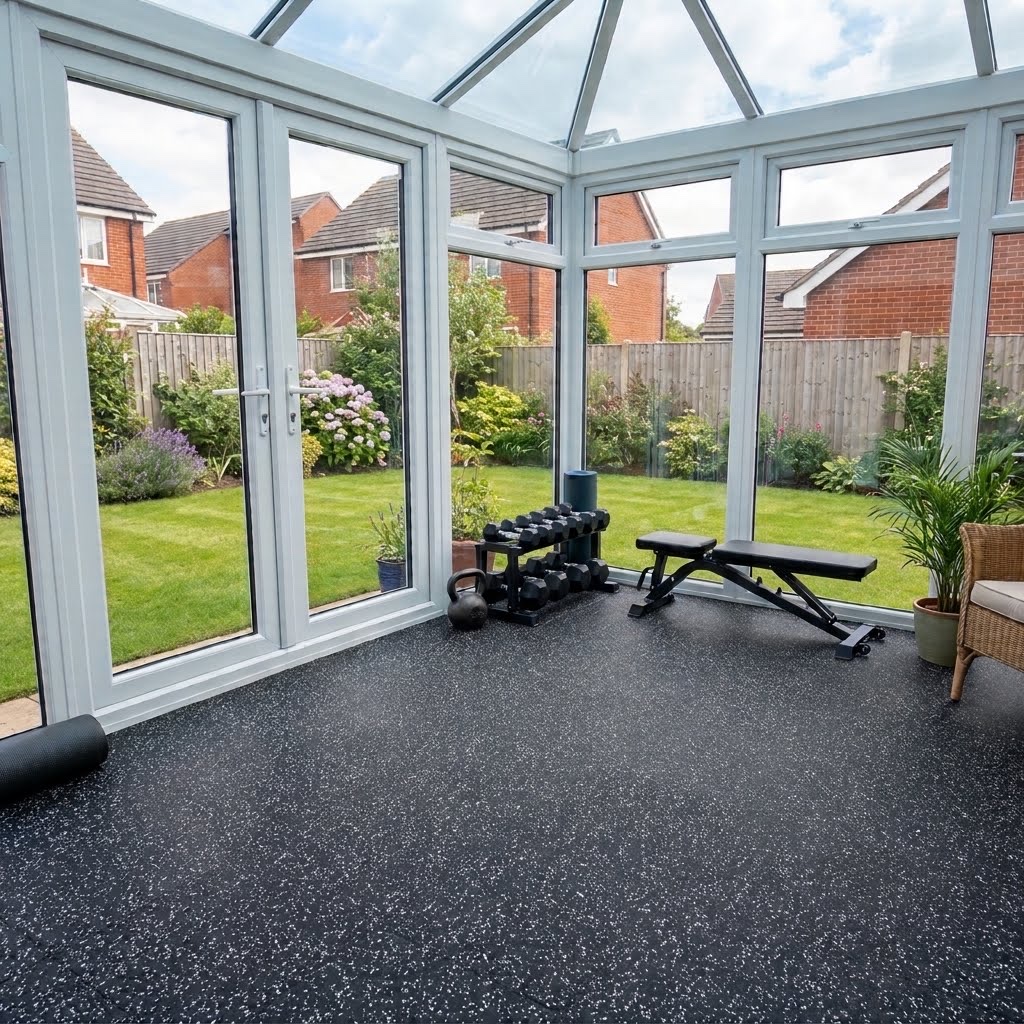
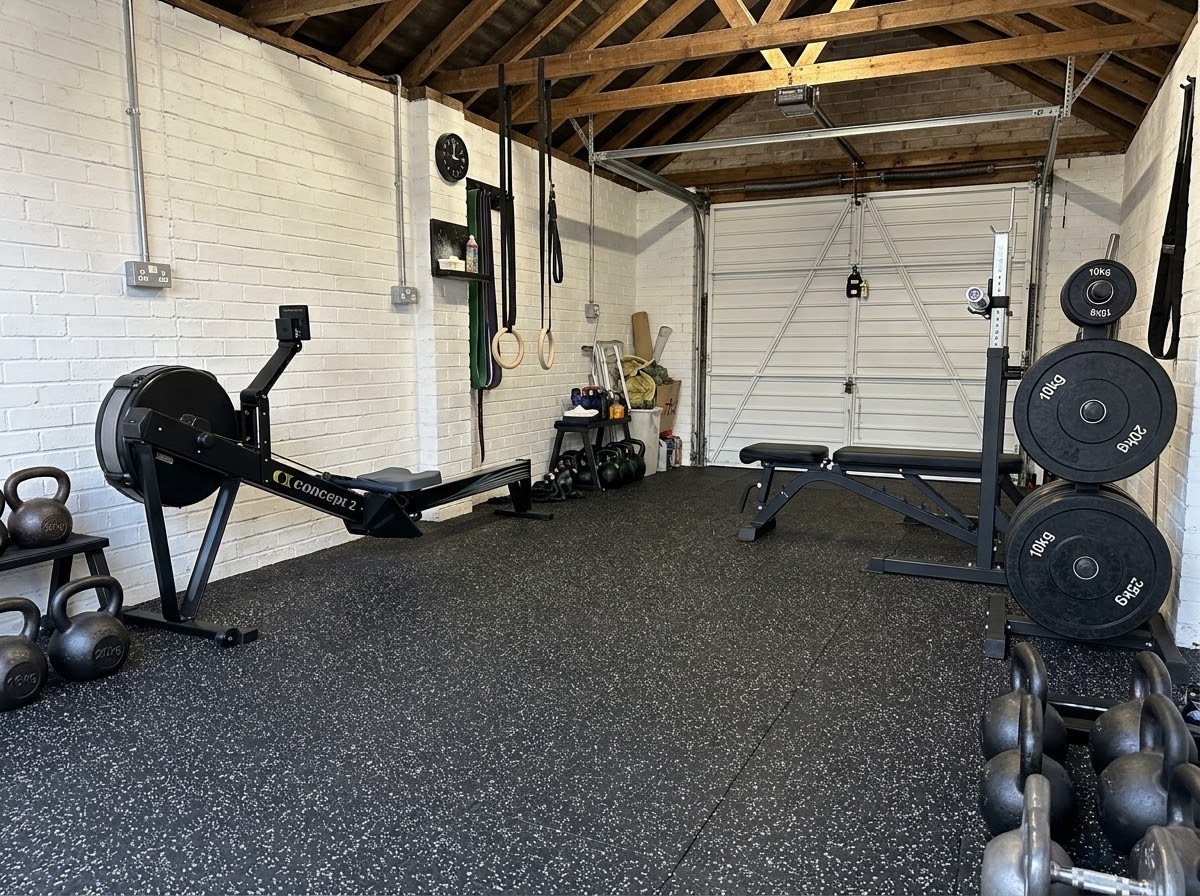
If you train alone with free weights, add a pair of tiles under the bar area and check the depth of your garage floor before you buy — the guide on our gym flooring page walks through measuring a room and cutting around walls and pillars.
20mm rubber flooring in a commercial gym
Commercial floors take a different kind of punishment: hundreds of members a day, racks lined up side by side, cardio machines on the same slab, and dumbbells that get dropped rather than lowered. That is where 20mm earns its keep.
The tiles sit under a row of power racks without denting, carry the weight of treadmills without creeping, and give a consistent, non-slip surface across the whole floor. They also wipe clean, which matters when the floor is the biggest surface in the building and the one your members judge first.
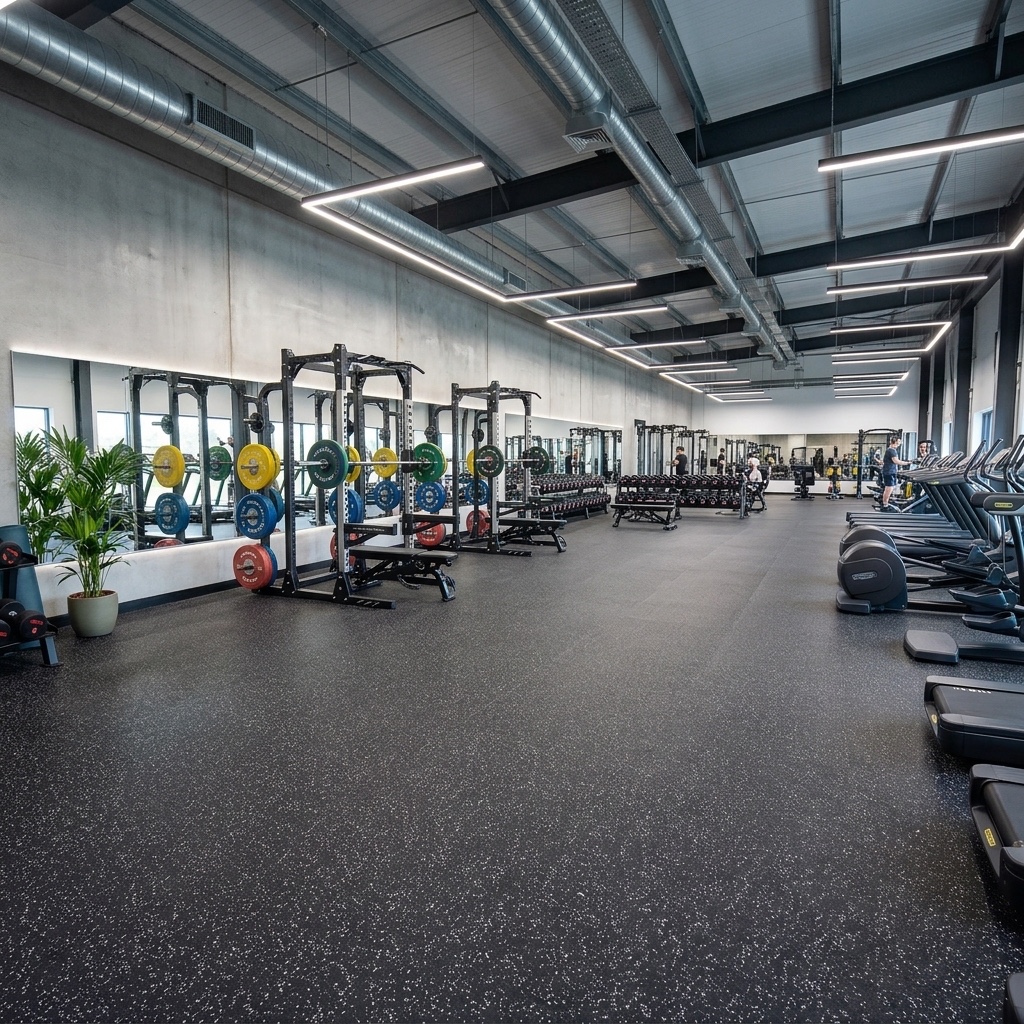
For fit-outs we quote by the square metre and deliver on pallets. See the full flooring range or call us with your floor plan.
How many tiles do I need?
Each 20mm tile covers one square metre. Measure the longest length and width of the room, multiply them together, then add 5–10% for cuts around walls, pillars and doorways. A 6m x 4m garage is 24m², so order 26 or 27 tiles and keep the spare for a future rack move.
Our flooring page has a coverage calculator that does the sum for you.
Ready to lay it?
Commercial-grade 20mm tiles come in black and white, black and yellow and black and grey fleck, with free UK mainland pallet delivery on orders over £500 and a 12-month warranty. Shop 20mm rubber gym flooring or call 07721 325882 and we will work out the tile count with you.
Common questions
How thick should rubber gym flooring be?
20mm is the best all-round thickness for a home or commercial gym. It absorbs the impact of dropped dumbbells and loaded barbells, protects the concrete beneath it and does not compress under racks or benches. Thinner 10-15mm mats are fine for cardio and bodyweight work, while 25-40mm interlocking mats suit functional areas, mat work and martial arts.
How many 20mm tiles do I need?
Our 20mm rubber tiles are 1m x 1m, so one tile covers one square metre. Measure the longest length and width of the room, multiply them together, then add 5-10% for cuts around walls, pillars and doorways.
Do 20mm rubber tiles need to be glued down?
No. They are heavy enough to sit loose over a flat, solid floor, which means you can lift them for cleaning or take them with you if you move. On ramps, in high-traffic doorways or where kit is dragged across the floor, a flooring adhesive keeps the joints tight.
Can 20mm rubber flooring go on top of carpet or floorboards?
It can, but it performs best on a solid, level subfloor such as concrete or screed. Over carpet or a springy suspended floor, the tiles will flex and the joints can open, so board the area out first if you can.